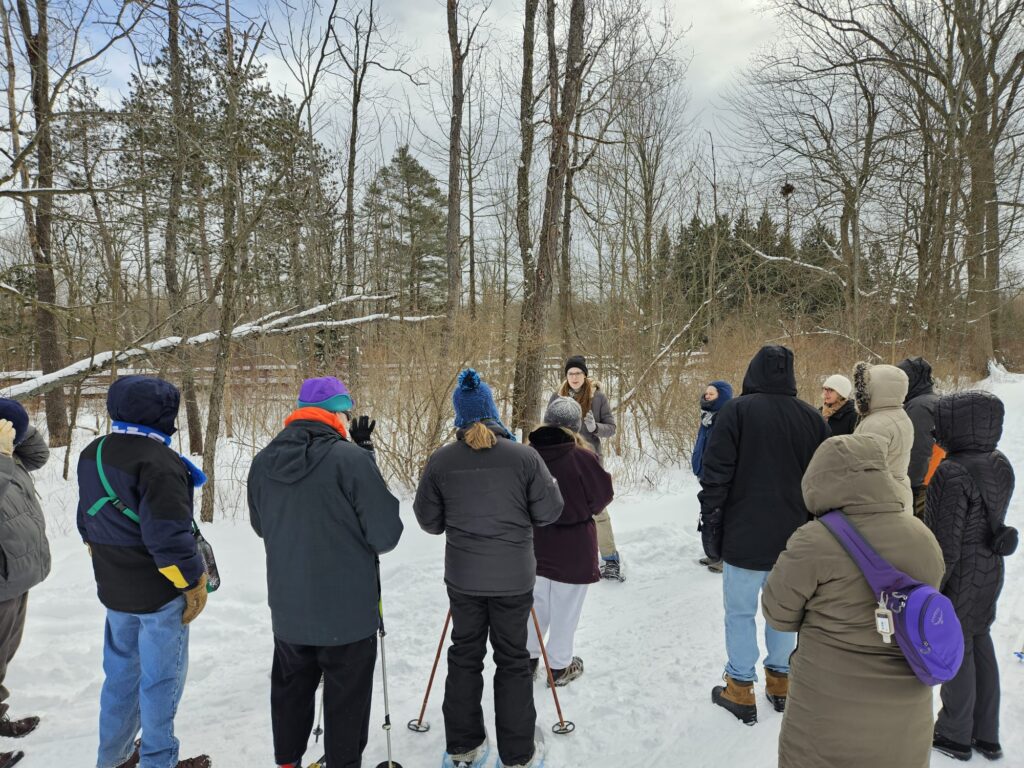
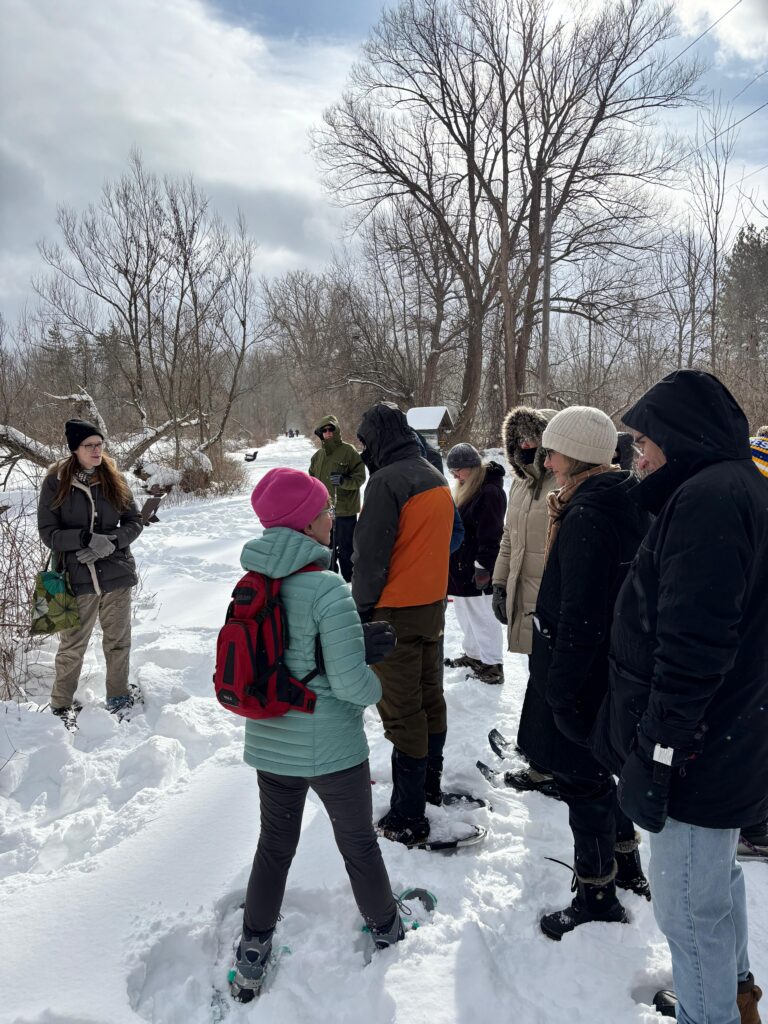
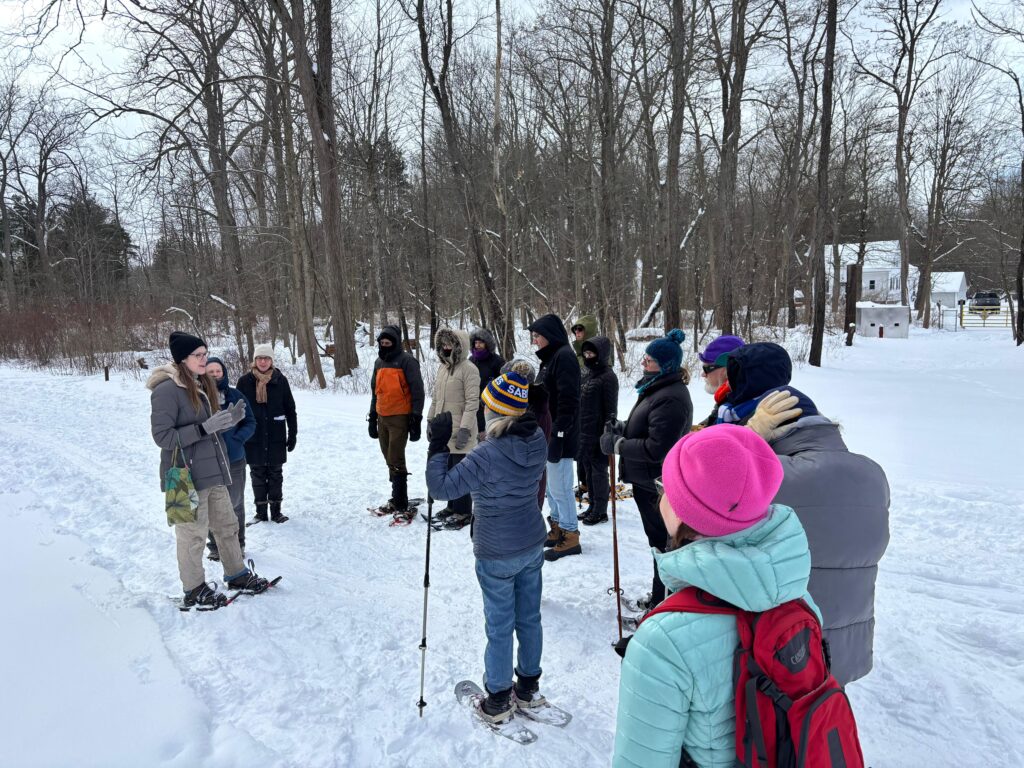
Despite below-freezing temperatures and lightly falling snow, a hardy group of about 20 people gathered for a winter plant identification hike at Reinstein Woods Nature Preserve. The group included a mix of Wild Ones Western New York members and non-members, all eager to sharpen their plant ID skills in the quiet beauty of winter.
Led by local naturalist Charlotte Way, the hike lasted just over an hour and offered a hands-on lesson in reading trees and shrubs without leaves—using bark, buds, growth habit, and site context to narrow down identifications. Snowflakes, frozen ground, and cold air didn’t slow the group’s curiosity one bit.
What We Learned Along the Trail
Charlotte guided participants through practical strategies for winter plant identification, including:
- How to distinguish native species from invasive look-alikes
- Key visual cues like opposite vs. alternate branching
- Common invasive shrubs that persist in winter and are easier to spot without leaves
- Native trees currently threatened by pests and disease, including ash and beech
The group spent time discussing the ecological impacts of invasive species such as honeysuckle, buckthorn, and multiflora rose, as well as the importance of recognizing and protecting native plants that support local wildlife year-round.
Plants Identified During the Hike
Below is a categorized list of trees, shrubs, and vines identified along the trail, including scientific names.
Invasive Species
- Eurasian honeysuckle (Lonicera spp.)
- Multiflora rose (Rosa multiflora)
- Common buckthorn (Rhamnus cathartica)
- Glossy buckthorn (Frangula alnus)
Non-Native
- Scotch pine (Pinus sylvestris)
Native Species
- Eastern cottonwood (Populus deltoides)
- White ash (Fraxinus americana)
- Grape (Vitis spp.)
- Black cherry (Prunus serotina)
- Red osier dogwood (Cornus sericea)
- Staghorn sumac (Rhus typhina)
- Black locust (Robinia pseudoacacia)
- Silver maple (Acer saccharinum)
- American beech (Fagus grandifolia)
- Yellow birch (Betula alleghaniensis)
- Red pine (Pinus resinosa)
- Nannyberry (Viburnum lentago)
- Black willow (Salix nigra)
- Paper birch (Betula papyrifera)
- White spruce (Picea glauca)
- Pin oak (Quercus palustris)
- Tulip poplar (Liriodendron tulipifera)
- Hawthorn (Crataegus spp.)
- Serviceberry (Amelanchier spp.)
- Virgin’s bower (Clematis virginiana)
A Winter Hike Worth Braving the Cold
Roughly a quarter of attendees were Wild Ones WNY members, with many new faces joining us for the first time—proof that winter is no barrier to learning, connection, and stewardship. Events like this highlight how much there is to discover in every season and how empowering plant identification can be for caring for our local landscapes.
Thank you to Charlotte and Reinstein Woods for an engaging, informative winter walk. We look forward to more hikes, workshops, and opportunities to learn together in the months ahead.