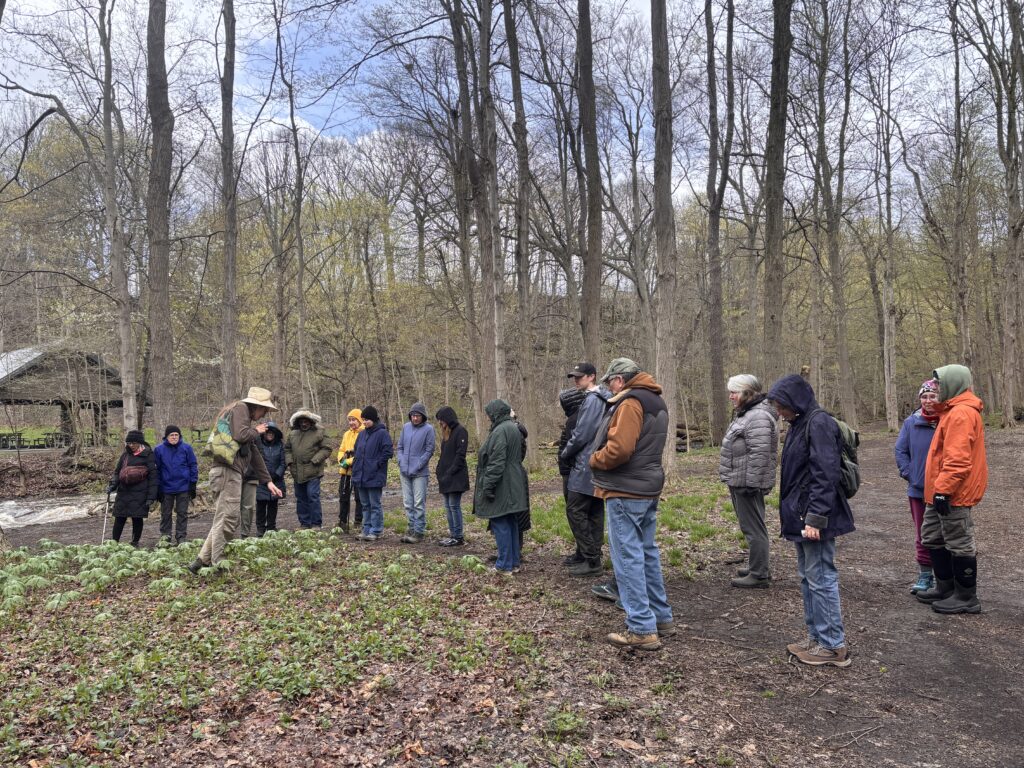
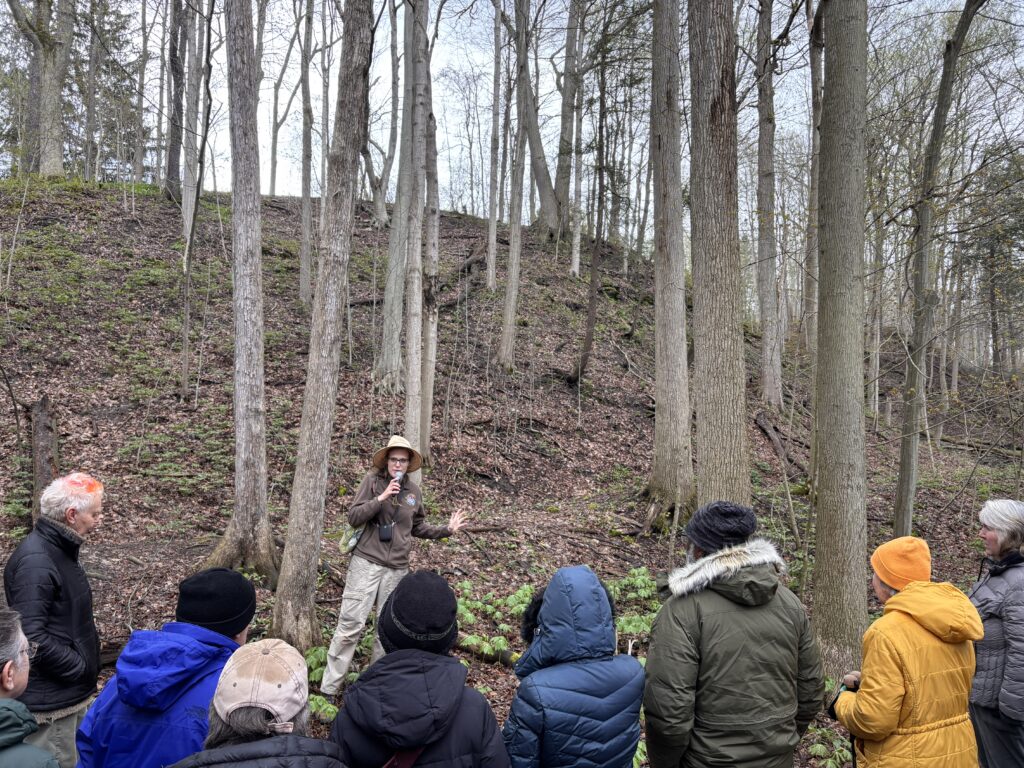
On a Sunday afternoon at Akron Falls Park, we set out on a spring ephemerals hike led by botanist Charlotte Way as snow fell around us.
It was the kind of day that feels uniquely Western New York. Snow at the start and end, a brief pause in between, and beneath it all, a quiet but determined emergence of spring.
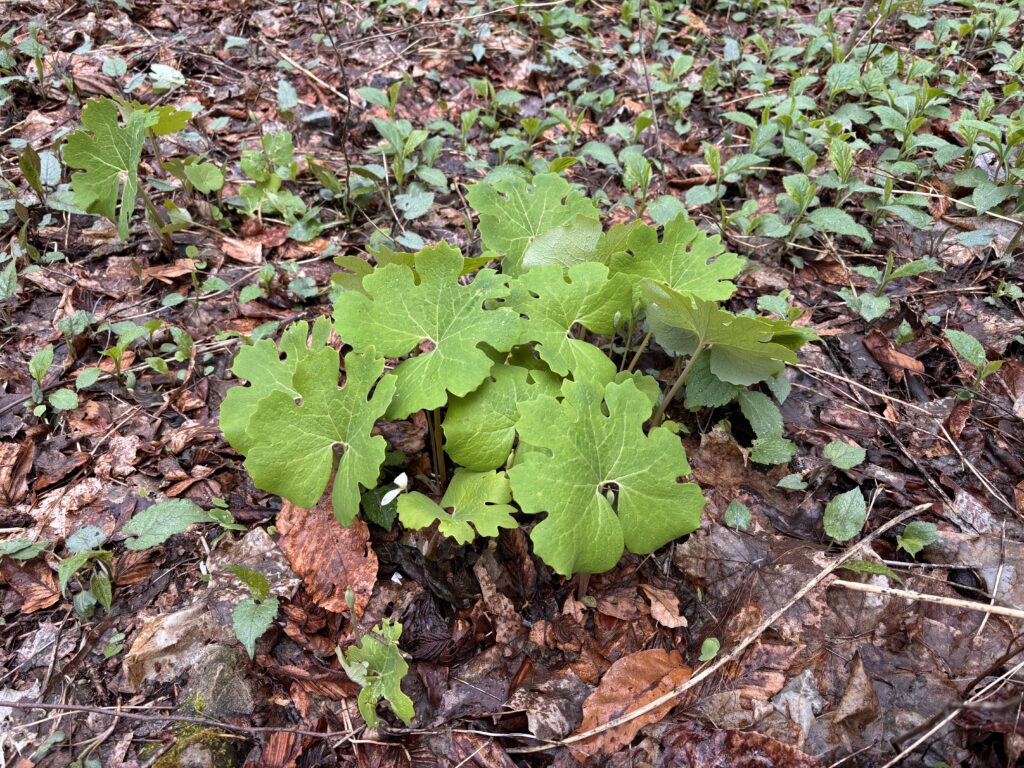
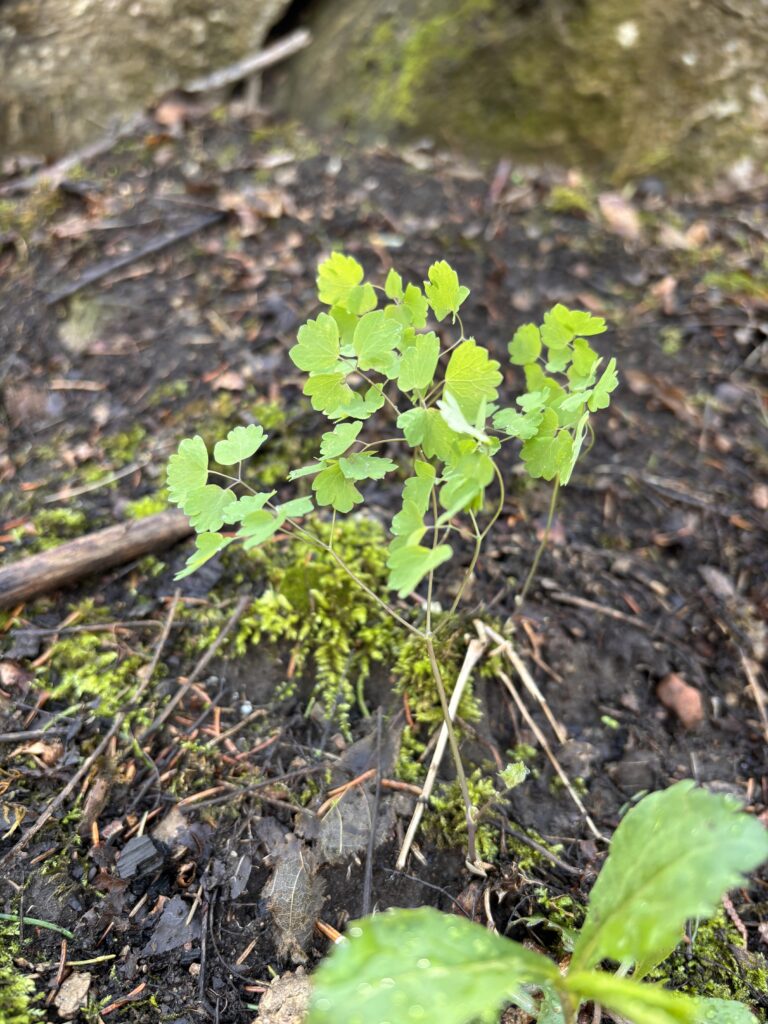
Small, fleeting, and easy to overlook
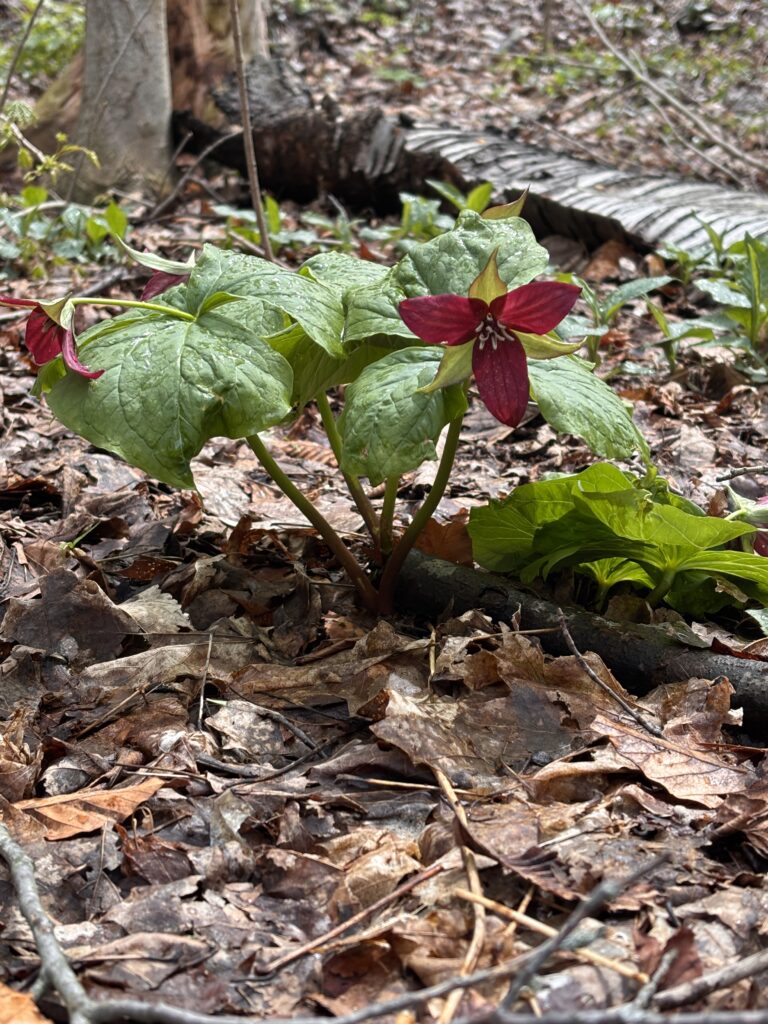
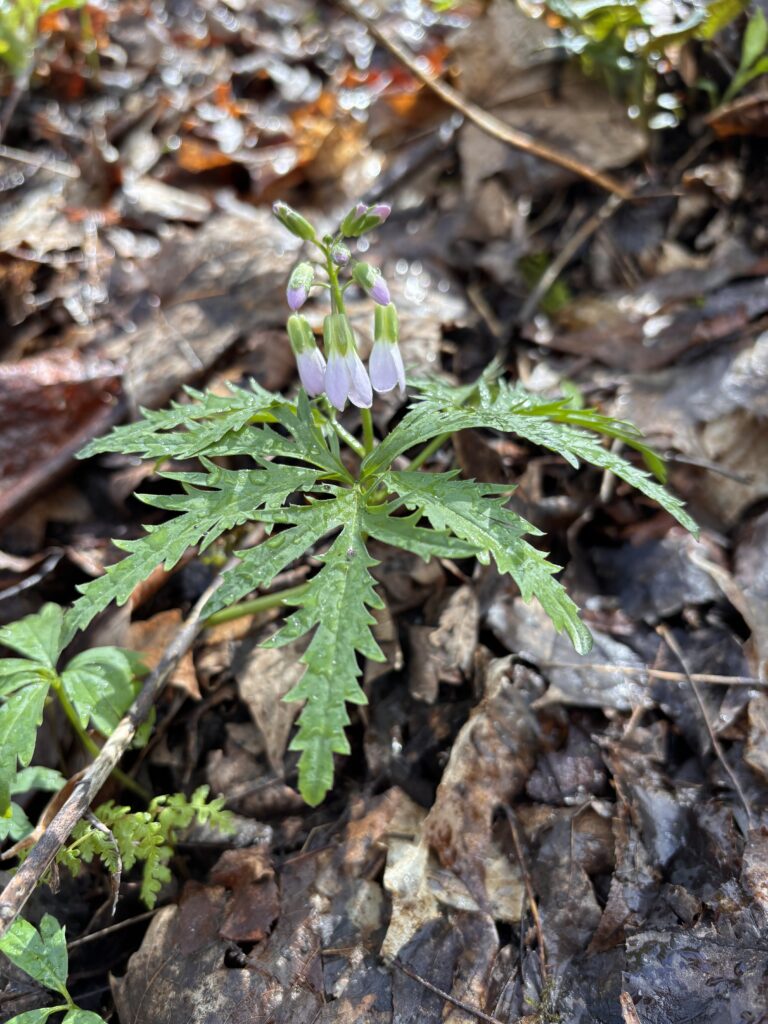
What stood out most wasn’t just one plant, but the collective presence of these early bloomers. Tiny, vibrant, and easy to miss if you’re not looking closely.
Patches of red, yellow, and violet dotted the forest floor. Each one felt a little precious. These plants exist in a narrow window before the tree canopy fills in and the light disappears. Then they’re gone.
Seeing them all at once made the ecosystem feel both beautiful and fragile. Like something briefly on display.
Learning from the ground up
Charlotte guided us with a steady stream of insights, blending deep knowledge with small, memorable observations.
She joked that she isn’t a fan of the name “false Solomon’s seal.” It’s a perfectly good plant that shouldn’t have to be defined by what it’s not. She also noted that box turtles rely on mayapple fruit as a food source. It’s a reminder that these plants are part of a much larger web of life.
Along the way, she pointed out native perennials, shrubs, and trees, helping us connect what’s blooming now to the broader forest structure that makes it all possible.
A slow-moving kind of joy
We moved slowly and intentionally. At times, it felt like we were barely covering ground. Every few steps, we paused, crouched, or called each other over to take a closer look. It became a shared experience of noticing. We were collectively tuning into details most people walk right past.
A landscape in motion
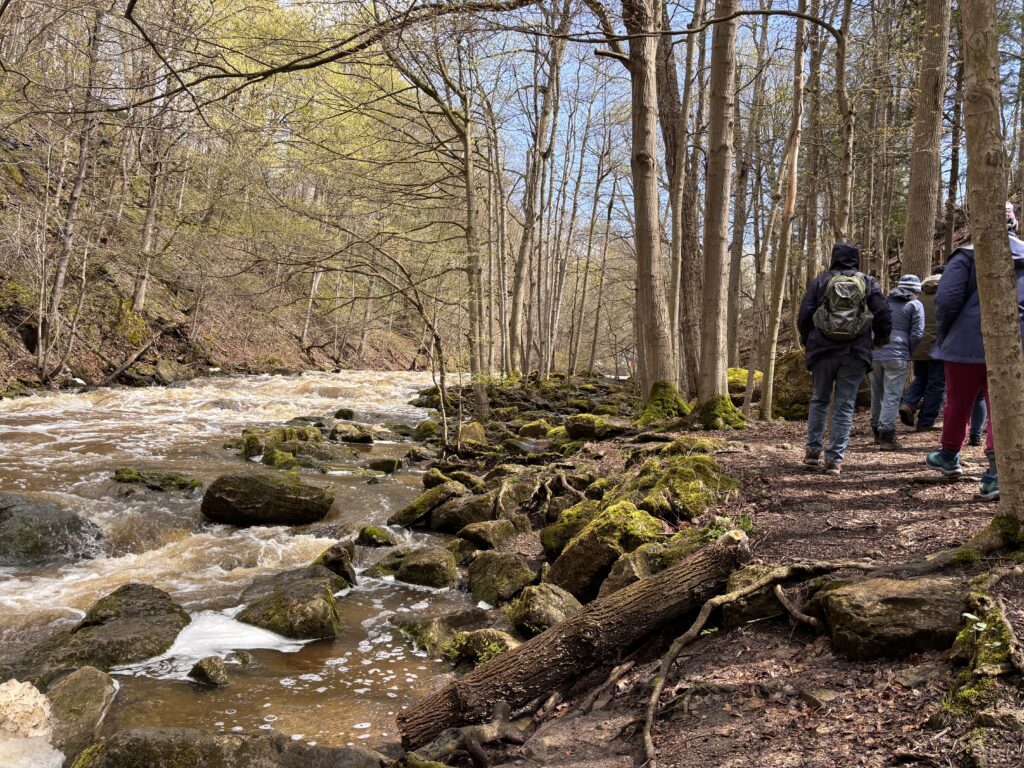
With recent rainfall, the falls were especially active, providing a constant backdrop to our walk. The sound of rushing water carried through the woods and grounded the experience in something larger.
Between the flowing water, the shifting weather, and the emergence of spring ephemerals, everything felt in motion.
Care and stewardship
As we moved through the site, there was a clear emphasis on care. We stayed on trail, avoided disturbing plants, and took time to pull several bags of invasive garlic mustard that had already begun to emerge. It was a small but tangible way to give back to the landscape.
Moments like that reinforce the role we all play, not just as observers, but as stewards.
Spring ephemerals observed
- Cutleaf Toothwort (Cardamine concatenata)
- Mayapple (Podophyllum peltatum)
- Red Trillium (Trillium erectum)
- Wild Ginger (Asarum canadense)
- Bloodroot (Sanguinaria canadensis)
- Trout Lily (Erythronium americanum)
- Herb Robert / geranium (Geranium robertianum)
- Solomon’s Seal (Polygonatum biflorum)
- False Solomon’s seal (Maianthemum racemosum)
- Ramps (Allium tricoccum)
- Jack-in-the-Pulpit (Arisaema triphyllum)
- Blue Cohosh (Caulophyllum thalictroides)
- Hepatica (Hepatica acutiloba)
Why it matters
Spring ephemerals are easy to overlook, but they’re foundational to early-season ecosystems. They support pollinators, contribute to soil health, and operate in tight synchrony with light, temperature, and tree canopy cycles.
Miss them, and you miss an entire layer of the forest.